Energy companies often bring complex stories to an exhibition stand: a system that operates across several sites, technology that improves an existing process, or a product whose value is difficult to see from the outside.
At ADIPEC 2026, taking place from 2–5 November at ADNEC Centre Abu Dhabi, your stand may need to explain that story to people with very different priorities. An engineer may want to understand how it works. A commercial visitor may want to know where it fits. A potential partner may be looking for an entirely different conversation.
The starting point for an interactive stand is therefore a brief: who needs to understand what, and what should happen after they do?
Begin with the visitors, not the screen
Before selecting a touchscreen, LED wall or interactive installation, write down the main visitor groups you expect to meet. For each group, identify one question your stand should answer.
For example:
- Technical visitor: How does the solution work in a real operating environment?
- Commercial visitor: What problem does it address, and where could it be used?
- Potential partner: Is there a reason for our teams to continue this conversation?
You do not need three separate experiences. One well-structured interactive application can offer different starting points and let visitors explore the detail that matters to them.
If you are still defining the wider visitor journey, Stedder’s guide to generating leads with an interactive exhibition stand covers the fundamentals. For ADIPEC, the next task is turning that approach into a clear brief for your specific solution and audience.
Choose one idea to demonstrate
A visitor should not have to read several panels before understanding why an interaction matters. Choose one idea that can be shown quickly.
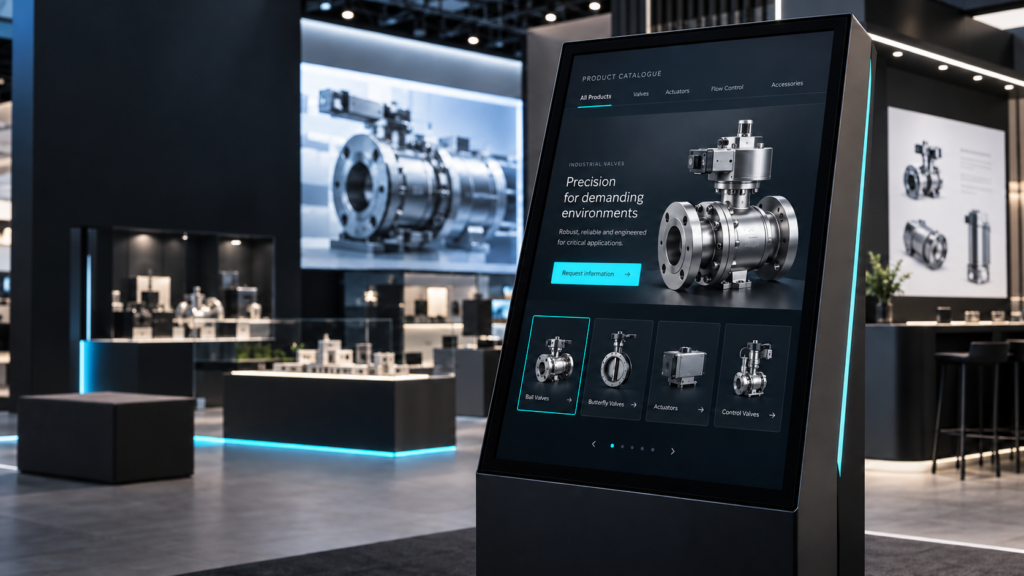
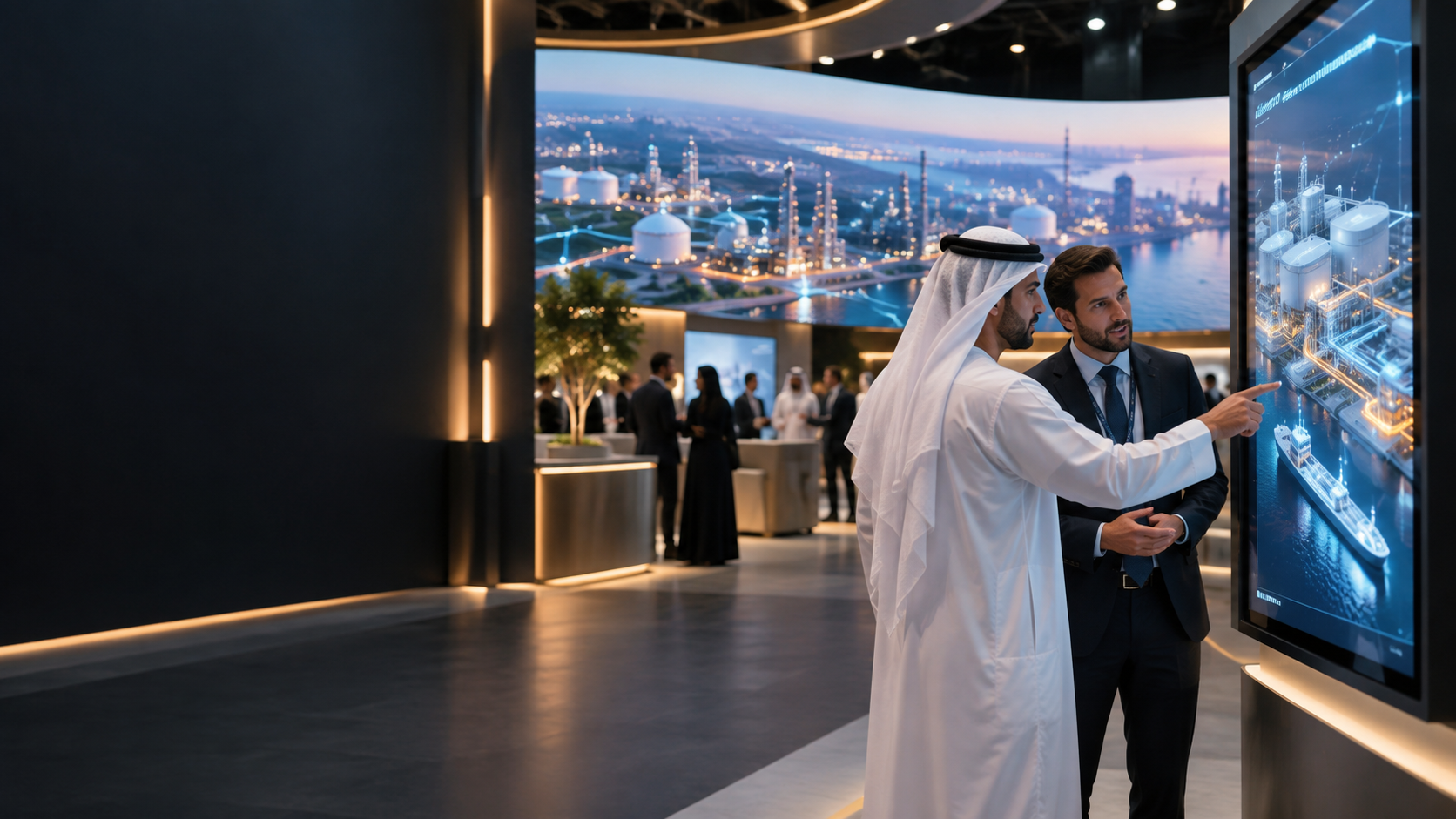
That might be a model revealing how a system connects across a facility, a short before-and-after scenario, or a product explorer that brings up the right information when a visitor selects an application. If the real product is too large, remote or complex to bring to the stand, a visual demonstration can make the conversation easier to begin.
Keep the first interaction simple. Allow interested visitors to go deeper with a member of your team instead of putting every specification on the opening screen.
Brief the content and the hardware together
A good concept can lose clarity when content is produced for the wrong screen size, viewed from an unexpected distance or installed where visitors cannot comfortably use it.
Your brief should include the stand drawing, screen location, intended viewing distance, language requirements and the action visitors will take. It should also show what appears on screen when no one is using the experience and how it returns to the start for the next visitor.
Stedder’s immersive content production covers content designed around physical spaces and interactive systems. If the display format is still undecided, AVRIX’s LED wall, TV and touchscreen comparison can help you define what each screen needs to do before requesting equipment.
Plan what happens after someone interacts
An interaction can show what interested a visitor. Make that information useful to the team following up.
If a visitor explores a particular solution, the next step might be a conversation with its specialist, a request for a technical sheet or a booked demonstration. Decide which details are needed to make that follow-up relevant. If several teams or partners share the stand, agree in advance who receives each type of enquiry.
Give visitors a clear reason to share their details, and make the handover easy for the person staffing the stand. The experience should help start a better conversation while the visitor is there—not depend entirely on an email sent later.
Test it in exhibition conditions
Review the experience from the aisle, not only on a designer’s laptop. Can a visitor tell where to begin? Is the text readable at the intended distance? Can someone use it while the stand is busy? Does it still make sense if they leave halfway through?
Test the complete path: opening screen, interaction, staff handover, enquiry capture and reset. Check what will happen if connectivity is slow or unavailable, and make sure the stand team knows whom to call if something stops working.
For the equipment and onsite delivery side of the brief, AVRIX has a separate ADIPEC 2026 AV rental and exhibition support guide covering displays, installation and technical planning.
Turn the idea into a workable brief
Before approaching a production team, gather five things: your stand drawing, the audiences you want to meet, the one idea you need to explain, the content you already have, and the next action you want visitors to take. You can refine the technology from there.
Planning an interactive stand for ADIPEC 2026? Share your brief with Stedder Technology. We can help shape the experience, content and technical approach around what your visitors need to understand.